
TLC & PLG Co-Host Program on Wildlife Rehabilitation
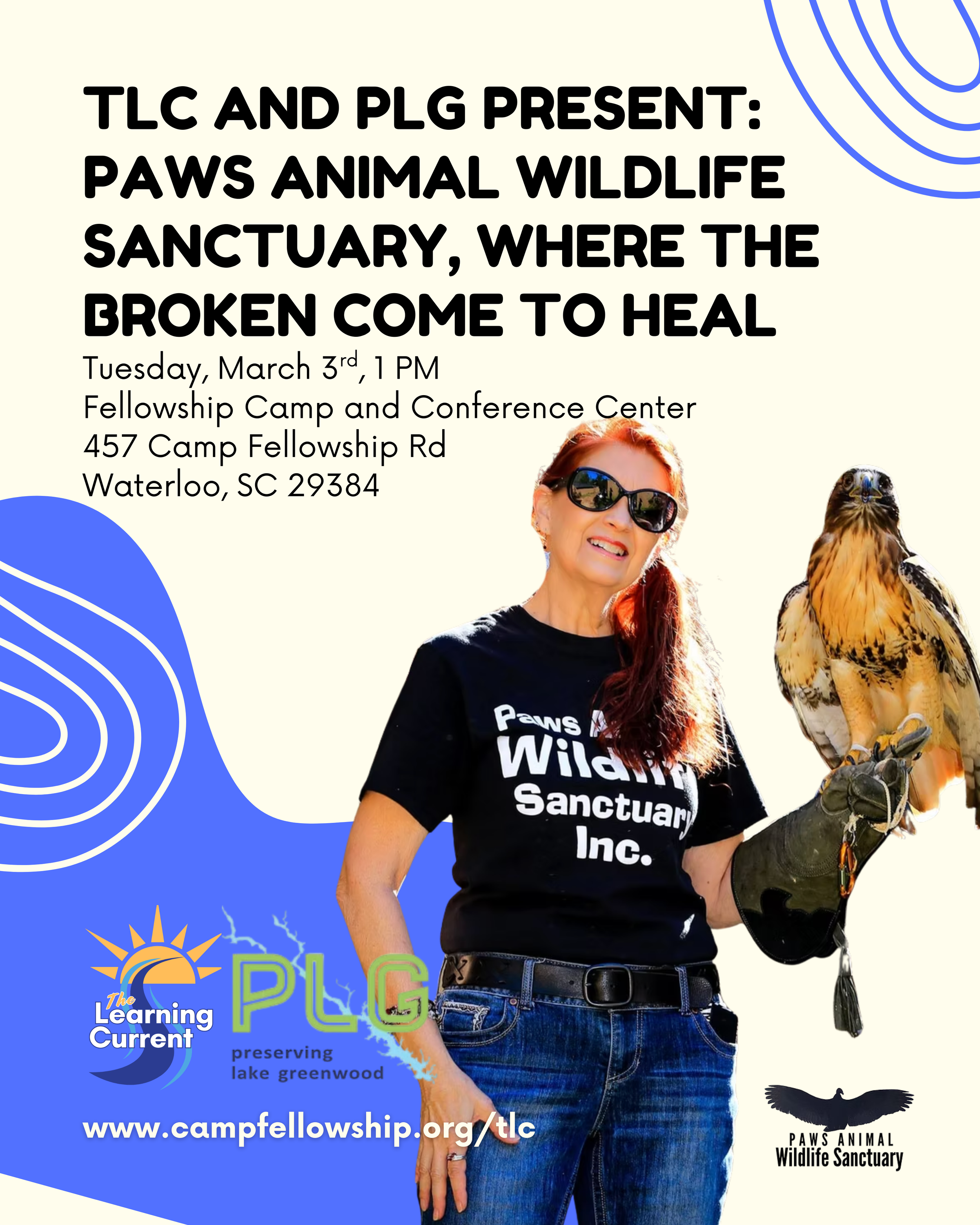
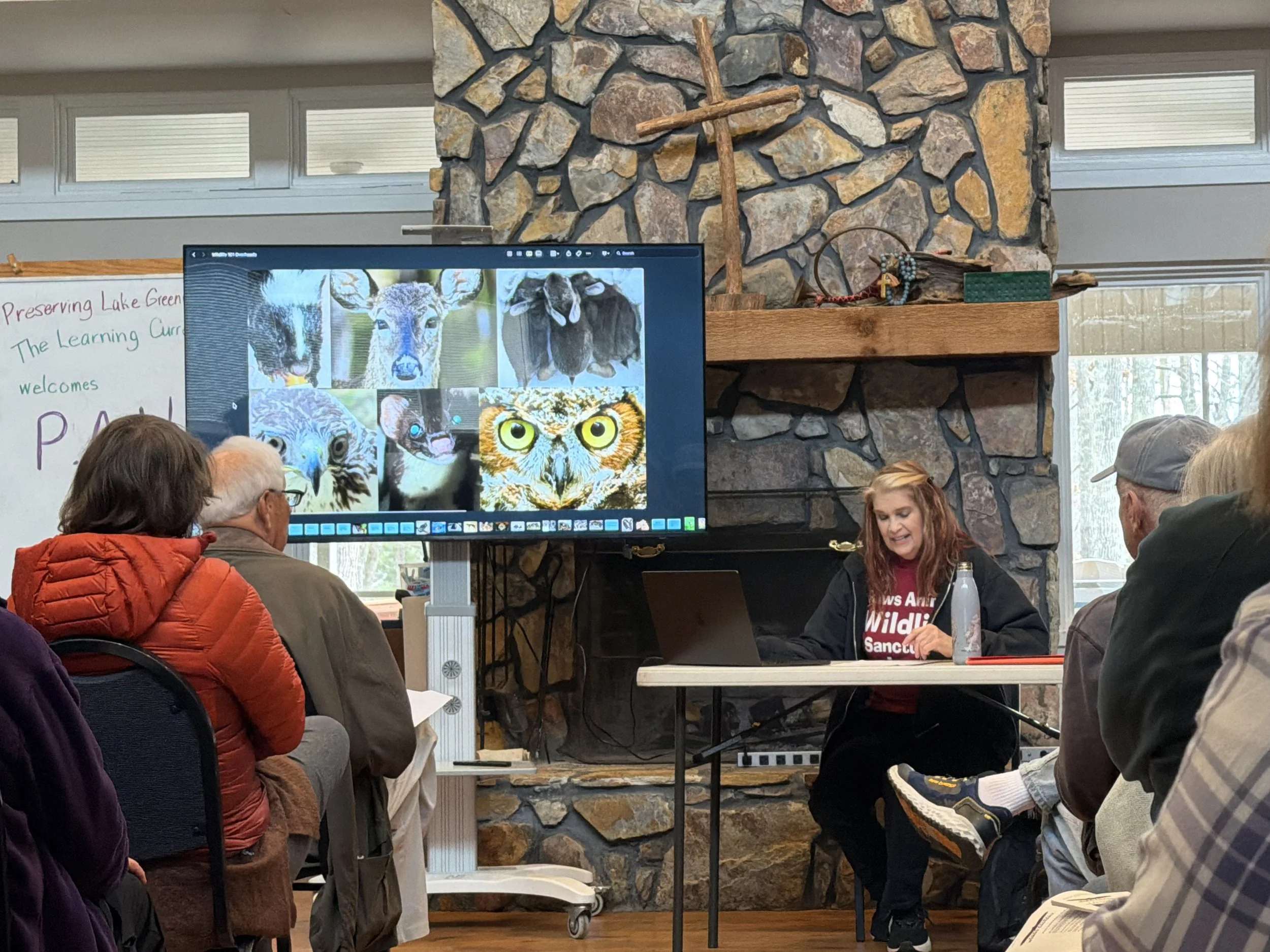
Wildlife Rehabilitator Mercedes Curry gave a wonderful program to the attendees at Camp Fellowship on Tuesday, March 3rd. Curry is the founder of PAWS Animal Wildlife Sanctuary located in Laurens, S.C. Her non-profit organization has found a niche offering care to wild animals with difficult or expensive care or situations that other groups might not be able to handle. Because of this, they take in animals from many counties across the State of South Carolina. Curry holds a wide array of rehabilitation licenses which allows her group to lawfully take in species that other facilities cannot. PAWS coordinates with other wildlife rehabilitators to fill crucial gaps in care for wildlife. Their guiding philosophy bases every decision on the well-being of each individual animal that comes to them, and they have had many successful releases back into nature because of their approach.
During the program, Curry gave insight and instructions to those in attendance about what to do when you find wildlife which may need care. She explained that this is the most common type of call they get on a regular basis, and the information is important for everyone to know, because most likely at some point in time, everyone will come across an animal in need of special care and rehabilitation. Here are some things everyone should know:
Not all animals need help right away! If the animal is NOT in immediate danger from wounds or predators, monitor it from a distance and, before touching it, consult these guidelines and our species-specific resources below.
Wild animals can react strongly when experiencing fear or pain. Smaller animals also have delicate limbs and joints that can be damaged by improper or rough handling. Before touching the animal, protect yourself with equipment such as gloves, and protect the animal by capturing gently with towels, soft netting, or a padded box.
Captured wild animals must be kept in a quiet, dark place far away from children, people, and other animals such as pets. Wild animals can transmit parasites and illnesses to humans and other pets, and high contact with humans and animals can stress already traumatized wildlings. As much as possible, avoid handling wild animals, and take care to wash your hands.
If you already have the animal contained, DO NOT FEED IT. Animals experiencing injury, extreme stress, or shock need medical treatment first, and food later. (If your child broke an arm, would you rush her or him to a restaurant, or to a hospital?) Furthermore, many wild animals have very specific dietary requirements and limitations and feeding them the wrong food can do more harm than good.
Do NOT EVER feed cow’s milk or human baby formula to young wild animals! These fluids cause health issues that often kill animals! It is preferable not to feed at all while transferring the animal to a wildlife rehabilitator.
For animals that are young or in shock, a heat source must be provided. Put a heating pad (set on “low”) under only half of the carrier or box used to contain them or fill a water bottle with hot/warm (NOT boiling) water and secure it near the animal, where it won’t roll onto small critters. Most importantly, the animal MUST be able to get away from the heat source if it gets too warm for them.
Interestingly, one of the most common misunderstandings people have is when they encounter a baby deer in the wild, they think it has surely been abandoned, or that the mother has been killed so they remove the fawn to “rescue” it. In almost every instance however, the fawn has been placed there by the doe to stay there quietly while she forages and feeds around the areas nearby and will always be coming back to feed and gather the fawn. Many, many fawns are inadvertently separated from their mothers by well-meaning people, only to perish because they need very specific feeding and care that most people are not equipped or able to provide for them.
If you find yourself in need of helping to rescue a wild animal or aren’t sure whether to intervene or not, contact Paws by calling (864) 715-2171. PAWS has volunteers who answer this number and they will guide you. Also, you can find more details on how to help specific animals, such as birds, deer, opossums, racoons and squirrels on the PAWS website. PAWS is always in need of volunteers and people willing to donate money and supplies. One of the specific ongoing needs they have is for local people who fish to donate whole fish they have caught and frozen. If you can help with this, please contact the group and they will instruct you further about this process. Another thing they currently need assistance with is the rebuilding of one of the raptor enclosures on their property.
If you can help with the donation of your time, your talents or by donating funds or needed supplies, you can visit their website: https://pawssc.org or call them at (864) 715-2171.
The program was sponsored by Preserving Lake Greenwood (PLG) and Fellowship Camp and Conference Center’s The Learning Current (TLC).
To learn more about The Learning Current’s upcoming offerings, visit https://www.campfellowship.org/tlc, and to learn more about Preserving Lake Greenwood, visit https://preservinglakegreenwood.org.